
Tree Pruning
Tree Pruning St. Louis by ISA-Certified Arborists
Of all the professional tree care services available to St. Louis homeowners, proper pruning delivers the broadest long-term return. A well-executed pruning program improves tree health, builds structural resilience against the storms and ice events that define Missouri winters, extends the productive life of mature trees by decades, and reduces the likelihood that a tree will ever need to be removed. Done correctly by ISA-certified arborists, tree pruning is preventive tree care at its most powerful. Done incorrectly — by undertrained crews using the wrong cuts in the wrong locations — it creates permanent structural damage that no amount of future care can reverse.
We provide professional tree pruning services throughout St. Louis City, St. Louis County, Saint Charles County, and Jefferson County, led on every job by ISA-certified arborists who follow ANSI A300 pruning standards and understand how Missouri's climate, soils, and tree species interact to determine what each tree actually needs.
ISA Certified Arborists
ANSI A300 Standards
Greater St. Louis
Free Estimates
Professional Tree Pruning St. Louis Services
As a trusted Tree Pruning St. Louis service, we start with a deep understanding of one of the Midwest’s most diverse urban forests. The tree canopy spans everything from massive hundred-year-old white oaks in Ladue and Clayton to young redbud and dogwood plantings in newer developments throughout Saint Charles County. From silver maples lining older residential streets in Maplewood and Webster Groves to mature ash, sweetgum, and ornamental trees on commercial properties in Chesterfield, we understand the unique needs of every tree in our area.
Each of these trees has different pruning needs based on species, age, growth habit, and the specific pressures of its environment. Our ISA-certified arborists assess each tree individually — its crown structure, branch architecture, root zone condition, and history of any previous work — before developing a pruning approach that serves that specific tree's health and your property's goals. This is professional tree pruning: informed, precise, and grounded in tree care science. Not a crew with a chainsaw working by the hour.
Why Pruning Is the Most Valuable Tree Care Investment for St. Louis Homeowners
Trees are a long-term investment in your property. Research consistently shows that mature, well-maintained trees increase residential property values in St. Louis by ten to twenty percent. They reduce cooling costs, improve air quality, provide wildlife habitat, and define the character of St. Louis neighborhoods that have been recognized for their tree canopy for generations.
Protecting that investment requires professional tree care — and pruning is the core of it. Here is why St. Louis homeowners who invest in regular professional tree pruning see better outcomes over time than those who do not:
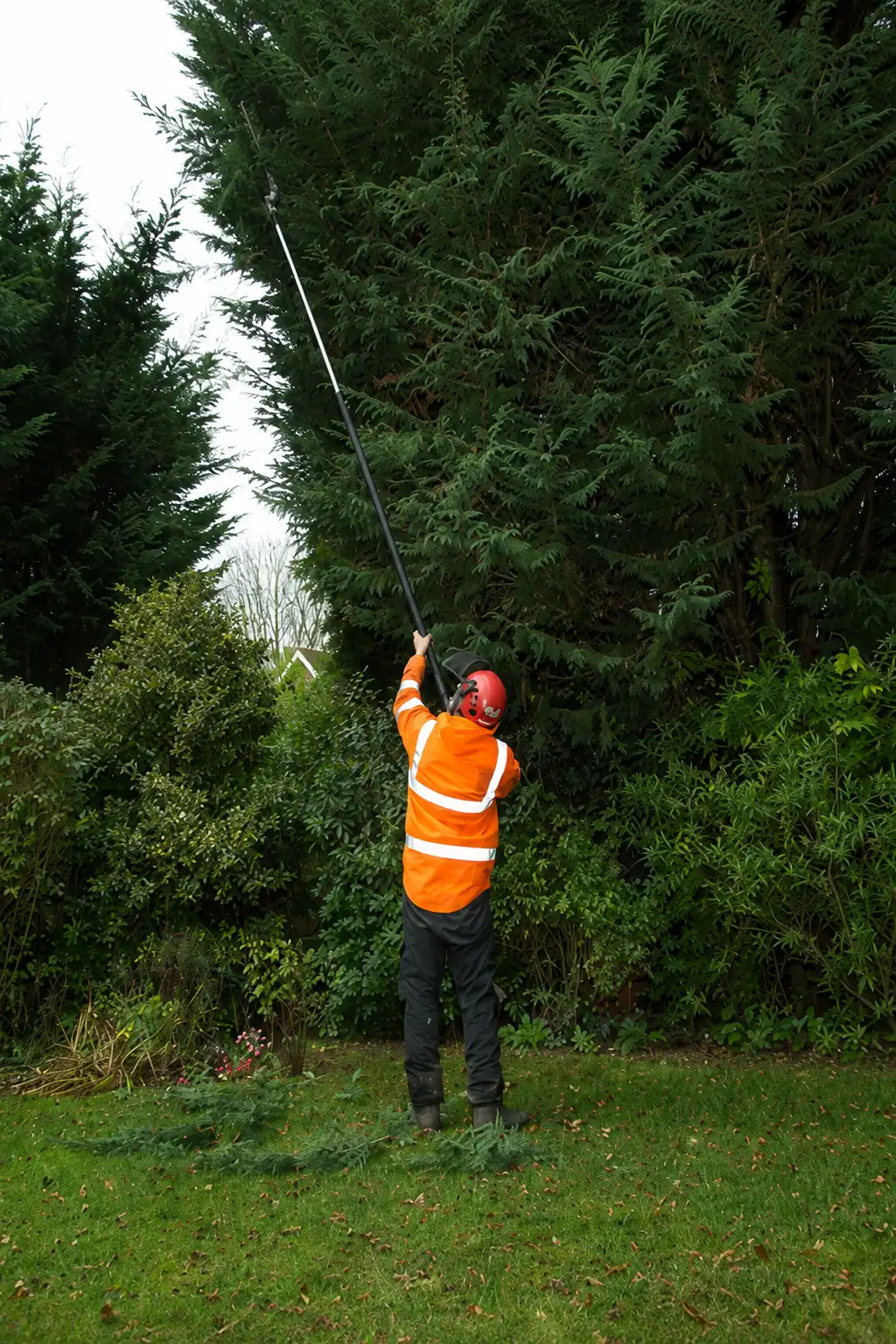
Storm damage prevention — St. Louis experiences some of the most severe thunderstorm activity in the country, regularly producing straight-line winds, derechos, and ice storms that cause catastrophic branch failure in trees with structural deficiencies. Proper pruning removes dead branches, eliminates weak unions, and distributes weight through the canopy so that wind and ice loads are handled safely. The cost of a single emergency tree removal after a storm consistently exceeds the cost of years of preventive pruning.
Extended tree lifespan — Mature trees allowed to accumulate deadwood, crossing branches, and structural defects deteriorate faster than properly maintained trees. Professional tree pruning — removing problems before they compound — extends the productive life of your St. Louis trees by decades in many cases.
Disease and pest control — Proper pruning improves air circulation through the canopy, reducing the moisture and stagnant conditions that favor fungal disease. Removing infected wood before disease spreads through the vascular system is one of the most effective interventions available for tree health. In St. Louis specifically, proactive pruning is part of managing Dutch Elm Disease in remaining elm trees, Oak Wilt risk in red oak clusters, and Anthracnose in sycamores and white oaks.
Structural development — Young trees pruned for proper branch architecture in their first ten to fifteen years develop dramatically stronger structures than trees left to grow without professional tree care. Early structural pruning is among the highest-return tree care investments a Saint Louis homeowner or property developer can make.
The Science Behind a Proper Pruning Cut
What makes a pruning cut correct or incorrect is not opinion — it is tree biology. Understanding why proper cuts matter helps St. Louis homeowners evaluate the quality of the tree care service they are receiving.
When a branch is removed, the tree's response depends entirely on where the cut is made. Trees do not heal wounds the way humans do — they do not regenerate tissue over a cut. Instead, they compartmentalize: they wall off the damaged tissue and grow new wood around it. This process is called CODIT — Compartmentalization of Decay in Trees.
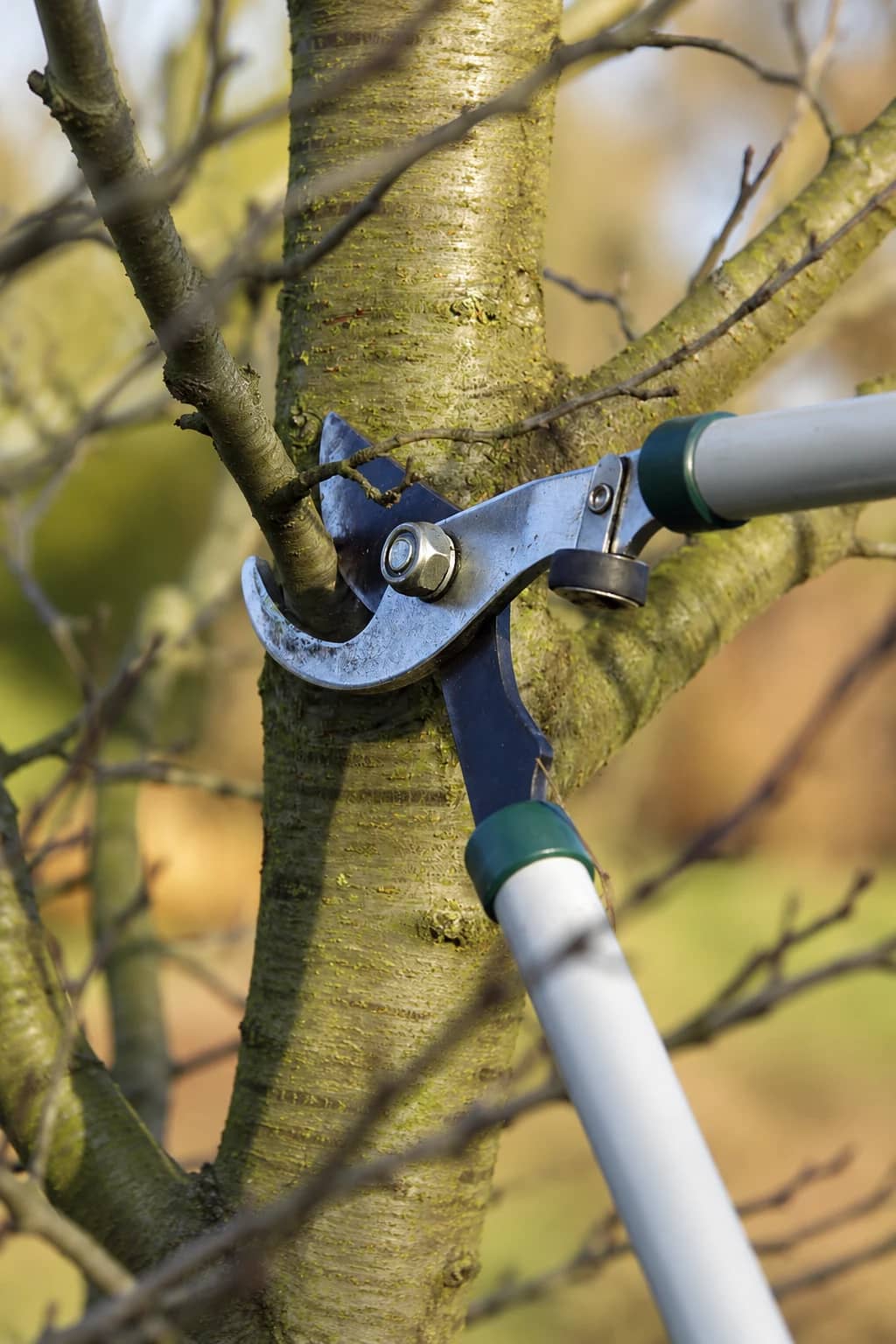
A correct pruning cut made just outside the branch collar (the slightly raised ridge of tissue where the branch meets the trunk or parent stem) preserves the tree's ability to compartmentalize efficiently. The wound closes from the outside in, year by year, with minimal decay penetrating the interior wood. A flush cut — made flat against the trunk — removes the branch collar tissue and destroys the tree's natural compartmentalization boundary, allowing decay to penetrate directly into the trunk wood. This damage is permanent.
This is why the skill of your arborist and the attention of your pruning crew matters at the level of every single cut on every branch. We hold our crews to ANSI A300 standards on every job — not because it is a marketing credential, but because correct cutting technique is the difference between pruning that genuinely improves a tree and pruning that causes slow, invisible structural damage that becomes a tree removal job five years later.
Pruning Young Trees in St. Louis — Building the Right Structure Early
The most impactful pruning work our arborists perform is on young trees that have not yet developed structural problems. Professional tree pruning during the first ten to fifteen years of a tree's life — structural pruning — shapes the branch scaffold in ways that pay dividends for the entire lifespan of the tree.
What structural pruning accomplishes for young St. Louis trees:
Establishing a clear central leader — Many tree species, particularly oaks and maples, perform best with a single dominant central stem rather than multiple competing co-dominant stems. Identifying and reinforcing the central leader early prevents the development of weak, included-bark unions that become hazard points in mature trees.
Spacing scaffold branches — Proper vertical spacing between major scaffold branches distributes structural load evenly. Branches too tightly spaced compete for light and resources and are more prone to failure.
Removing crossing and rubbing branches — Branches that cross or rub against each other create wound points as the tree grows. Early removal eliminates this problem before the trees are large enough to make the work complex.
Raising the crown as appropriate — Establishing proper clearance from the ground, structures, and infrastructure during the young tree phase is far easier than raising an established mature crown later.
The investment in professional tree pruning for young trees in your St. Louis yard pays off in safer, longer-lived, structurally sound trees that rarely require emergency tree services in their maturity.
Pruning Mature Trees in St. Louis — Health, Safety & Storm Resilience
Mature trees across St. Louis City and County present a different set of tree care challenges and priorities. Many of the most valuable trees in St. Louis neighborhoods — white and bur oaks in older residential areas, large silver maples along established streets, mature elms in parks and larger lots — are decades old and have accumulated structural issues, dead wood, and canopy conditions that require experienced arborist judgment to address safely.
Our approach to pruning mature trees in St. Louis focuses on:
Crown cleaning and deadwooding — The systematic removal of all dead, dying, and defective branches throughout the canopy. For large mature trees in St. Louis County neighborhoods, this is the single highest-impact pruning service for both safety and tree health. Dead branches in a mature tree canopy are unpredictable — they can fall without warning under their own weight, under ice load, or during wind events.
Weight reduction on overextended limbs — Large, horizontally extending limbs common on mature oaks and maples can develop excessive end-weight that creates leverage stress at the branch union during storms. Selective weight reduction — cutting back to lateral growth — reduces this stress without disfiguring the tree.
Canopy thinning for wind resistance — Thinning the interior of a dense mature canopy reduces the sail effect that causes whole-crown failures in high-wind events. Saint Louis derechos and straight-line wind events have caused enormous tree damage across St. Louis County. Properly thinned canopies move with wind rather than resisting it catastrophically.
Species-Specific Pruning Notes for Common St. Louis Trees
Not every tree should be pruned the same way or at the same time. Our arborists apply species-appropriate techniques on every job across Greater St. Louis.
Oak trees — Oaks should be pruned during the dormant season (late fall through early spring) to reduce the risk of Oak Wilt transmission, which spreads through fresh wounds during the growing season. Red oaks in particular should not be pruned from April through October without wound treatment. This is a specific St. Louis tree health concern that general tree services often ignore.
Silver and sugar maple — Late winter pruning (February–March) is ideal before sap flow begins in earnest. Maples pruned in early spring may "bleed" sap from cuts, which is harmless to the tree but can alarm homeowners. Our arborists will explain this if it applies to your trees.
Ash trees — Given the widespread Emerald Ash Borer damage across St. Louis County, ash tree pruning decisions are often intertwined with treatment and preservation planning. Our certified arborists can assess whether your ash tree is a candidate for ongoing care or whether removal is the more appropriate tree care decision.
Flowering ornamentals (redbud, dogwood, serviceberry) — Prune immediately after spring bloom, not before. These trees set their flower buds the previous summer; pruning before bloom removes the display you have been growing since last year.
Bradford and Callery pear — These trees have notoriously weak branch architecture and are prone to catastrophic splitting, particularly in St. Louis ice storms. Structural pruning in younger Bradford pears to eliminate the narrow-angled branch unions that cause splitting is one of the most useful services we provide for these trees — though many mature specimens are beyond correction and require monitoring for removal timing.
When Pruning Can Save a Tree — and When It Cannot
One of the most valuable things a certified arborist brings to a Saint Louis property assessment is the ability to make an honest, informed recommendation on whether a tree should be pruned and maintained or whether tree removal is the correct long-term answer.
Pruning can save or significantly extend the life of a tree when —the main structural wood of the trunk is sound; the damage, disease, or structural problem is concentrated in the canopy rather than the root zone or trunk; the tree is of sufficient size, age, and value to justify the investment; and proper treatment of the underlying problem (disease, pest, compaction) is part of the plan.
Pruning is not the right answer when —the trunk has advanced decay at the base or major root zone; the tree has lost more than fifty percent of its crown to disease, storm damage, or pest infestation; structural defects such as co-dominant stems with included bark are too large and advanced to be addressed safely; or the tree is of a species or in a location where the risk it poses cannot be adequately mitigated by pruning alone.
We will never recommend tree removal when a tree can be saved —and we will never recommend continued pruning and maintenance when a tree has reached the point where removal is the safer, more honest answer. Our goal is to give St. Louis homeowners the accurate information they need to make the right decision for their property and their trees.
Tree Pruning Cost in St. Louis, MO
Professional tree pruning in St. Louis typically costs between $200 and $1,000 per tree, with most residential pruning jobs falling in the $250–$600 range. Cost is driven by: cost:
Tree size and canopy complexity — A small ornamental dogwood or redbud in a front yard requires far less labor than a large-canopy silver maple or mature oak with extensive deadwood spread across a wide crown.
Scope of work — A targeted deadwood removal visit costs less than a full crown cleaning with thinning and structural correction. Our arborists explain exactly what is involved and why before any work begins.
Species and current condition — Trees with advanced structural problems, significant deadwood accumulation, or disease issues require more time and skilled attention than healthy trees receiving routine maintenance pruning.
Access — Trees in open areas are less complex to work in than those surrounded by structures, fences, or other trees that limit positioning and rigging options.
We provide free, written pruning estimates across all of Greater Saint Louis. For St. Louis homeowners with multiple trees, we offer multi-tree assessments that evaluate the full property and prioritize pruning work by urgency and impact.
Tree Pruning FAQs — St. Louis, MO
What is the difference between tree pruning and tree trimming in St. Louis?
In practical terms for most St. Louis homeowners, tree pruning and tree trimming refer to the same professional service. When performed by a certified arborist, both involve the selective removal of branches following ANSI A300 standards to improve the health, structure, safety, or appearance of your trees. If there is a distinction, it is this: pruning implies a more clinical, health-focused approach — removing specific branches to achieve a tree health or structural outcome — while trimming can carry an aesthetic connotation. In either case, you want an ISA-certified arborist making the decisions. Our team provides the same standard of professional tree care regardless of what you call the service.
Can trees be pruned in summer in St. Louis?
Yes, with important caveats. Light corrective pruning and hazard branch removal can be performed any time of year. However, heavy pruning during St. Louis's hot, humid summer is not ideal for most tree species — fresh cuts close more slowly, and trees under heat and drought stress are more vulnerable to wound-related decline. Oak trees specifically should not be heavily pruned from April through October due to Oak Wilt transmission risk. For major crown cleaning, structural work, or large-scale deadwooding, late fall through early spring is the preferred window for most St. Louis trees.
How often do trees need to be pruned in St. Louis?
Most mature trees in St. Louis benefit from professional pruning every two to four years. Young trees being trained for structure may benefit from lighter annual pruning for the first five to ten years. Fast-growing, structurally problematic species like silver maple and Bradford pear may warrant annual attention given how quickly they develop new hazard branches. The right frequency depends on species, age, health, and the specific goals for the tree. Our arborists will recommend a pruning schedule tailored to your trees after a free on-site assessment.
Will pruning my trees prevent storm damage in St. Louis?
Proper professional tree pruning significantly reduces storm damage risk — it is one of the most effective storm preparation measures available to St. Louis homeowners. Crown cleaning removes the dead branches most likely to fail under ice and wind load. Crown thinning reduces the sail effect that causes whole-canopy failures in high-wind events. Structural pruning addresses weak branch unions and overextended limbs before they become failure points. No tree care service eliminates storm risk entirely — trees are living structures in a natural environment — but properly maintained trees consistently suffer less damage and cause less property damage than neglected ones.
My tree has not been pruned in years. Is it too late to start?
It is rarely too late to benefit from professional tree pruning. Even trees that have been neglected for many years can be improved through a structured pruning program — beginning with a thorough crown cleaning and deadwooding, followed by structural correction work over successive visits as the tree responds and recovers. The one exception is when a tree's structural problems are so advanced that pruning alone cannot adequately address the safety risk, in which case our arborists will be upfront about the limitations. Contact us for an honest assessment and we will tell you exactly where your tree stands.
Schedule Your Free Tree Pruning Assessment in St. Louis, MO
Ready to invest in the long-term health and safety of your Saint Louis trees? Our ISA-certified arborists are ready to come to your property, assess every tree honestly, and give you a clear written plan and estimate before any work begins.
Or call us directly: (314) 408-6696
Serving: St. Louis City · St. Louis County · Saint Charles County · Jefferson County · Clayton · Webster Groves · Kirkwood · Ladue · Chesterfield · Creve Coeur · Des Peres · Maplewood · Brentwood · University City · Valley Park · Greater St. Louis and all surrounding communities.
RELATED SERVICES:
Fast Response - We Reply in Under 2 Hours
Get Your Free Estimate Today
Your information is 100% safe and never shared.