
Tree Trimming
Tree Trimming St. Louis by ISA-Certified Arborists
Proper tree trimming is one of the best investments you can make in the long-term health, safety, and appearance of your St. Louis property. Done right — by ISA-certified arborists following ANSI A300 pruning standards — regular trimming strengthens tree structure, reduces storm damage risk, extends the life of mature trees, and keeps your landscape looking sharp season after season. Done wrong, it can permanently damage or kill trees that took decades to grow.
We are a locally owned and operated tree service company providing professional tree trimming and tree pruning throughout St. Louis City, St. Louis County, Saint Charles County, and Jefferson County. Every trimming job is led by an ISA-certified arborist who knows St. Louis trees and St. Louis conditions — because pruning in Missouri is not the same as pruning anywhere else.
ISA Certified Arborists
ANSI A300 Standards
Fully Insured
Free Estimates
Professional Tree Trimming St. Louis Services
The tree care needs of a St. Louis property are shaped by this city's specific climate — hot, humid summers, hard freezes, ice storms, and powerful spring thunderstorms that put real stress on every branch and union in the canopy. Our certified arborists understand how these conditions interact with the most common tree species found across the Greater St. Louis area: white and red oaks, silver and sugar maples, American elms, ash trees, Bradford and Callery pears, Eastern redbuds, dogwoods, sweetgums, sycamores, and river birches, among others.
Our St. Louis tree trimming team provides full-service pruning for residential homeowners and commercial properties across all of Greater St. Louis. Whether you need a single ornamental tree shaped up before summer, a row of overgrown Bradford pears brought back into scale along a driveway, a large oak deadwooded before storm season, or branches over power lines cleared on a commercial property in Saint Charles County — we bring the right people and the right equipment to every job.
Tree Trimming vs. Tree Pruning — What Is the Difference?
These two terms are often used interchangeably by homeowners, and honestly, most professionals in the tree care industry treat them as the same service. If you are looking for either tree trimming or tree pruning in St. Louis, you are looking for the same thing: the selective removal of branches to improve the health, structure, safety, or appearance of your trees.
That said, there is a subtle distinction in how tree service professionals sometimes use these words. Tree trimming tends to refer to shaping a tree for aesthetic reasons — keeping it proportional, clearing sight lines, or managing size. Tree pruning carries a more clinical meaning: the targeted removal of dead, damaged, diseased, crossing, or structurally weak branches to improve tree health and reduce risk. In practice, a professional trimming job always incorporates sound pruning principles. The two are inseparable when the work is done correctly.
What they both mean on your St. Louis property: healthier trees, lower storm damage risk, and a yard that looks like it is actively cared for.
Types of Tree Trimming & Pruning We Perform in St. Louis
Our arborists use the correct pruning method for each tree's species, age, condition, and location. There is no one-size-fits-all approach — a young oak being trained for structure requires a completely different cut sequence than a mature silver maple being deadwooded before tornado season.
Crown Cleaning
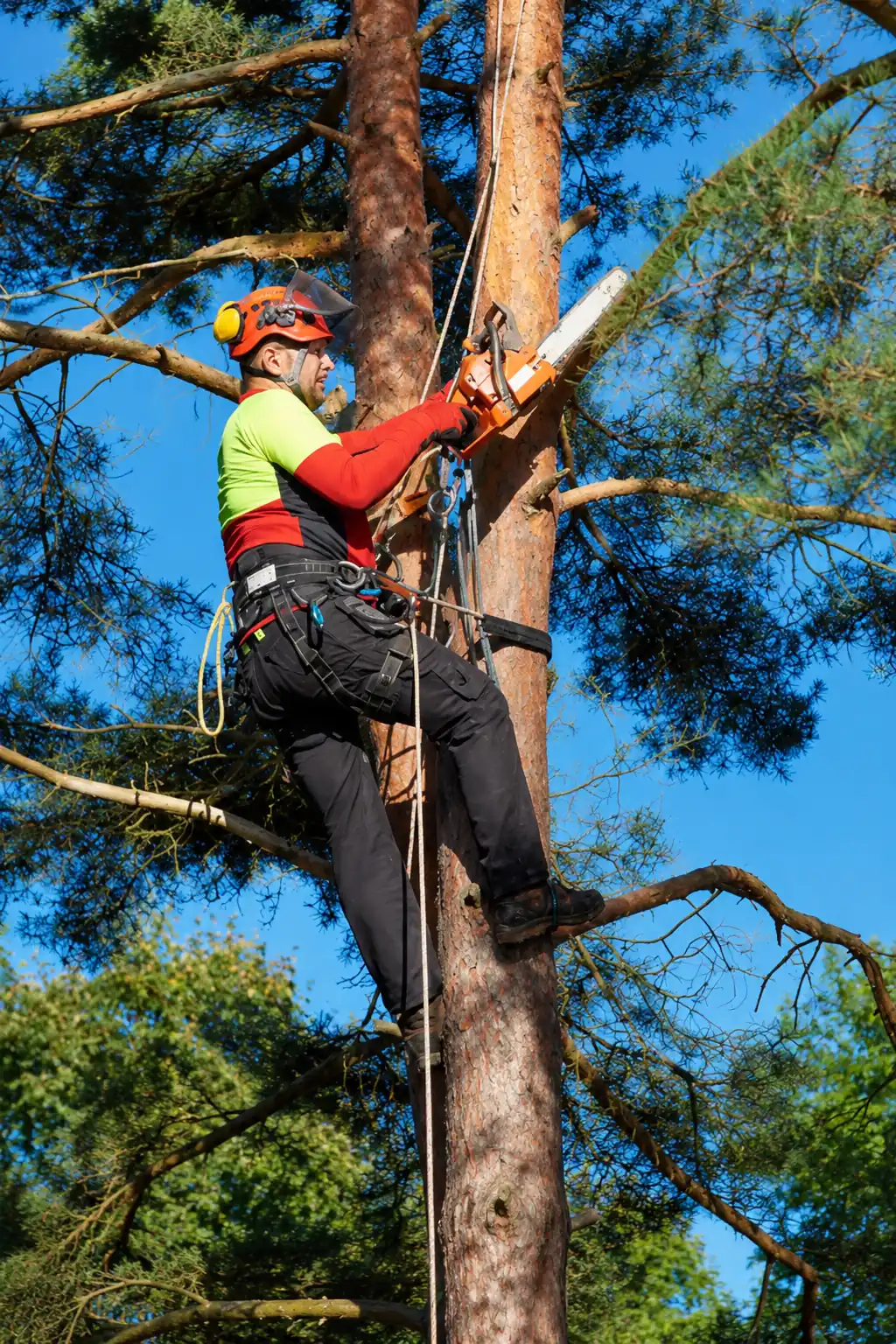
Crown cleaning is the most comprehensive St. Louis tree trimming service and the foundation of any thorough tree care program. It involves traversing the entire canopy — top to bottom — and removing dead branches, crossing and rubbing branches, weakly attached branches, and any growth showing signs of disease or pest damage. For large trees in St. Louis County neighborhoods, crown cleaning can take several hours of skilled arborist work. The result is a canopy that is structurally sound, properly ventilated, and dramatically lower risk during storms.
Crown Thinning
Crown thinning selectively removes live branches throughout the interior of the canopy to improve light penetration and air circulation without reducing the overall size or shape of the tree. It is particularly valuable for dense species like silver maple and sweetgum that are common across St. Louis City and County. Better airflow through the canopy reduces disease pressure and lessens the sail effect that causes branch failure in high winds.
Crown Raising
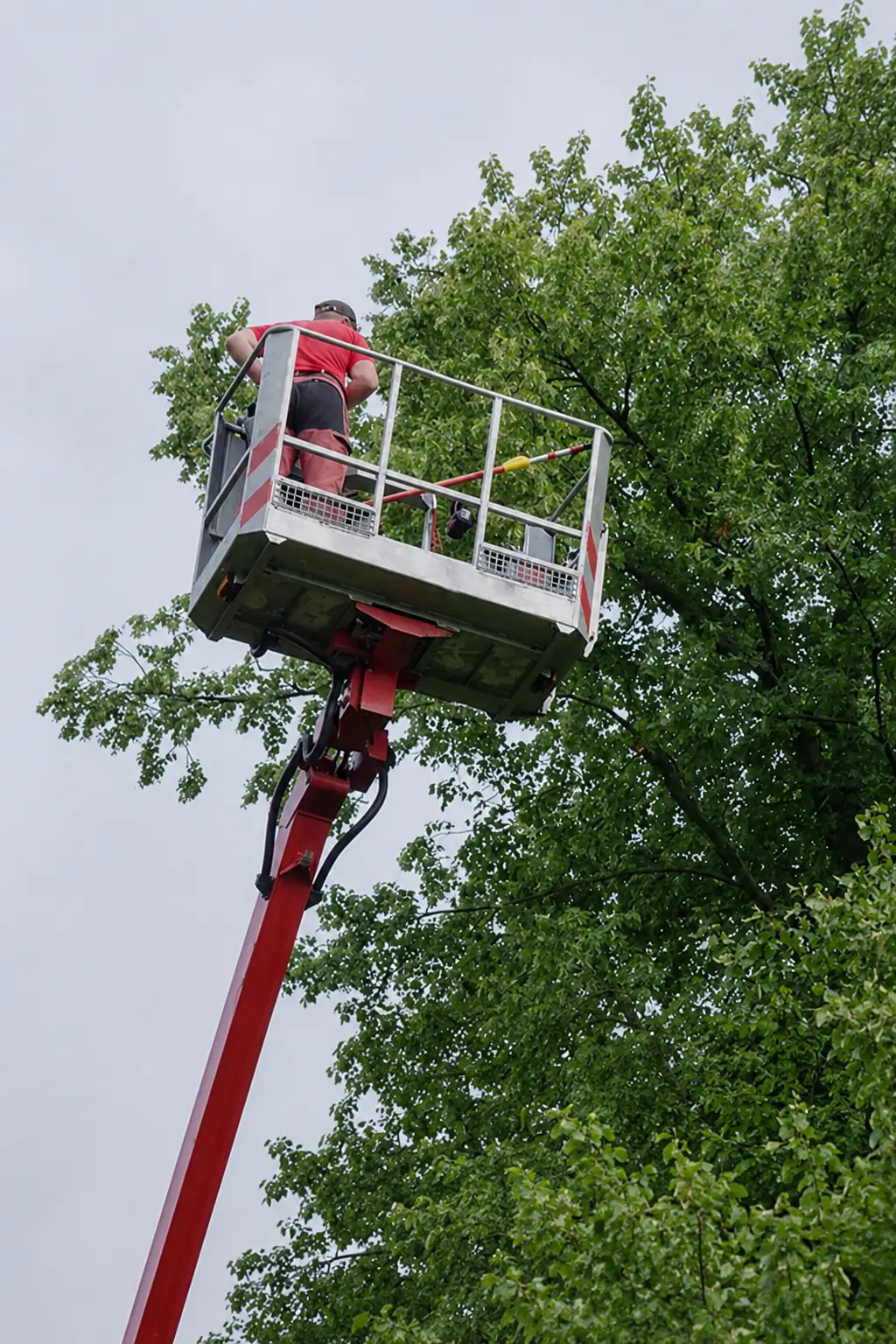
Crown raising removes the lower branches of a tree to increase clearance above the ground, a sidewalk, a driveway, or a structure. It is commonly requested by St. Louis homeowners who need clearance over a patio, along a property line, or for vehicle access under a canopy. It is also required by many municipalities in St. Louis County when branches begin to encroach over public sidewalks or roadways.
Crown Reduction
Crown reduction reduces the overall size of the tree by cutting branches back to suitable lateral growth points — maintaining the tree's natural form while reducing height or spread. This is the correct technique for managing a tree that has outgrown its space near a structure. Crown reduction is fundamentally different from tree topping (see below), which causes long-term structural damage.
Deadwooding
Deadwooding is the targeted removal of dead, dying, and brittle branches throughout the canopy. It is one of the most important safety services we perform, particularly before St. Louis storm season. Dead branches — called widow-makers in the industry — can fall without warning and cause serious property damage or injury. A thorough deadwood removal job significantly reduces this risk while also improving the tree's appearance and overall tree health.
The Best Time to Trim Trees in St. Louis, MO — A Seasonal Guide
Timing matters in tree care. St. Louis has a humid continental climate with genuine seasonal extremes — which means the trimming calendar here is specific and worth following.
Late Winter (February–March) — Best Overall Time for Most Trees
Late winter is the single best window for major pruning work on most deciduous trees in St. Louis. Trees are dormant, which means pruning wounds close faster, there is no active insect and disease pressure, and the crew can see the full branch structure clearly without leaf cover. Species like oak, maple, elm, ash, and hickory all benefit from dormant-season pruning in the St. Louis area.
Early Spring (March–April) — Good for Flowering Trees After Bloom
Spring-blooming trees like Eastern redbud, dogwood, and serviceberry should be pruned immediately after they flower — not before, or you eliminate the bloom. Pruning these trees in early spring right after bloom closes sets them up well for the growing season. Avoid heavy pruning of these species in summer when they are under heat stress.
Summer (June–August) — Light Corrective Work Only
Summer is not ideal for major pruning in St. Louis. The heat and humidity stress trees, and fresh cuts are slow to close when a tree is in active growth. Summer pruning is appropriate for light corrective work — removing a broken branch, clearing a hazard, or a small crown raising job. Full crown cleaning and deadwood removal projects are better held for late fall or winter.
Fall (September–November) — Avoid Major Pruning
Fall is the worst time for major tree pruning in St. Louis. Trees are entering dormancy, wound closure is slow, and fresh cuts made in fall are more vulnerable to fungal invasion over the winter. We recommend against scheduling large pruning jobs in fall unless there is a specific safety reason — like a dead branch that cannot wait until dormancy.
Year-Round — Dead Branch and Hazard Removal
Dead branches, storm-damaged limbs, and immediate safety hazards should be removed whenever they are identified — regardless of the season. Waiting for the ideal pruning window is not appropriate when a branch poses an active risk to your home or family.
Why Proper Pruning Standards Matter — And Why Tree Topping Destroys Trees
Every trimming and pruning job we perform follows ANSI A300 pruning standards — the industry benchmark established by the American National Standards Institute for professional tree care. These standards define where and how cuts are made, how much live canopy can be removed in a single visit, and what constitutes proper pruning technique for each species and situation.
This matters because improper pruning is the single leading cause of premature tree failure and death in urban environments. There are many companies and individuals in the St. Louis area who offer tree trimming without ISA certification, without ANSI training, and without any understanding of tree biology. The damage they cause is permanent.
The most harmful pruning practice is tree topping — also called hat rack pruning. Topping involves cutting a tree's main branches back to stubs at an arbitrary height, dramatically disfiguring the tree. It is still offered by some companies in Greater St. Louis as a way to "reduce a tree's size" or "keep it away from the house." It does neither safely. Topping destroys the tree's natural structure, generates masses of weakly attached epicormic regrowth that is more dangerous than the original canopy, opens large wounds that the tree can rarely close, and typically kills the tree within a few years or leaves it structurally compromised indefinitely.
If a company quotes you tree topping instead of crown reduction — walk away. We use correct, ISA-standard crown reduction techniques that actually achieve your goals without destroying the tree.
Tree Trimming Cost in St. Louis, MO
Tree trimming in St. Louis typically costs between $200 and $1,200 per tree, with most residential jobs falling in the $300–$700 range. The main factors that determine cost:
Tree size and species — A small ornamental redbud or dogwood in a front yard costs far less to trim than a 60-foot silver maple with a wide-spreading canopy over a house in Webster Groves or Ladue.
Number of trees — Multi-tree jobs are more cost-efficient on a per-tree basis. If you have several trees that need trimming at the same time, consolidating the visit saves on mobilization and cleanup costs.
Scope of work — A light crown raising differs significantly in labor from a full crown cleaning on a large specimen tree. We assess each tree individually and quote accordingly.
Access and location — Trees growing over structures, near power lines, or in constrained locations require more care, rigging, and time than trees in open yards with easy access.
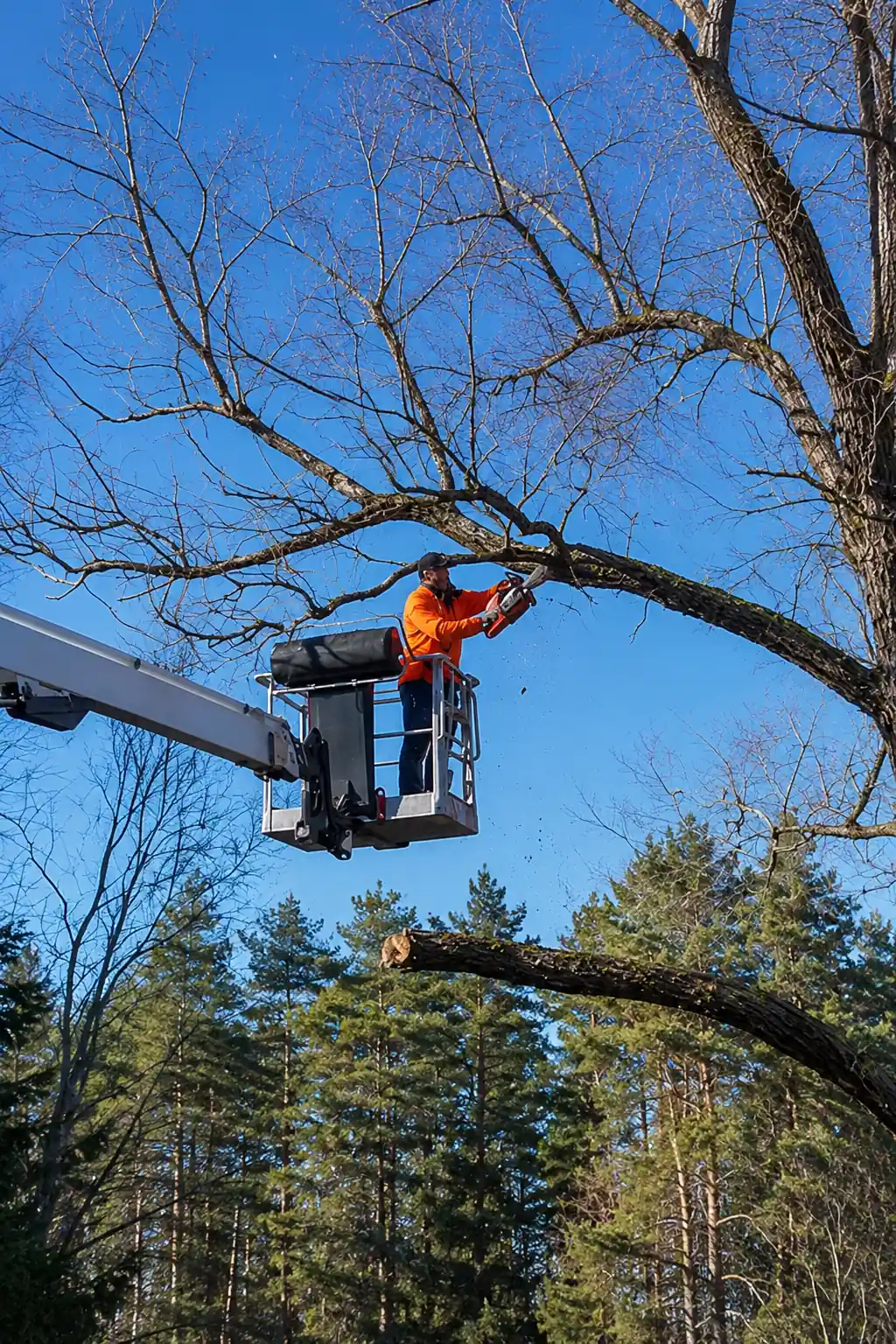
We provide free, written estimates on all tree trimming jobs across the Greater St. Louis area. Call or submit an inquiry to schedule your free on-site assessment.
Branches Over Power Lines in St. Louis
Branches encroaching on utility lines are one of the most common trimming requests we receive across St. Louis County, St. Louis City, and Saint Charles County. Trees growing into overhead power lines create real fire and outage risks — and the trimming requirements are more specialized than standard crown work.
In Missouri, Ameren Missouri and other utilities maintain the right to trim trees within their easements, but the work they do is often aggressive and does not prioritize tree health. Proactive trimming by a certified arborist using proper crown raising and directional pruning techniques can keep your trees healthy and in line with utility clearance requirements — without the butchery that often results from utility crew work.
We are experienced in utility line clearance trimming across Saint Louis City and County and can coordinate with your utility provider when needed. If you have branches touching or approaching power lines, contact us before the utility company does it for you.
Residential & Commercial Tree Trimming in Greater St. Louis
We provide tree trimming and tree care services for homeowners and commercial property owners throughout the St. Louis metro area. On the residential side, we handle everything from single ornamental trees in front yards to full-property trimming programs for larger lots in Ladue, Town and Country, Frontenac, and Chesterfield. In the city, we regularly work on mature street trees and urban lots in Webster Groves, Maplewood, Brentwood, and University City.
Our commercial tree trimming team serves property managers, HOAs, municipalities, school districts, churches, retail centers, and office parks. We carry full commercial liability coverage, work within your property management approval process, and can set up scheduled annual or semi-annual trimming agreements so your trees are maintained on a consistent calendar.
Tree Trimming FAQs — St. Louis, MO
How often should trees be trimmed in St. Louis?
Most mature trees benefit from a professional trimming every two to three years. Fast-growing species like silver maple, cottonwood, and Bradford pear may need annual attention given how quickly they develop branch issues. Young trees being trained for structure may need light corrective pruning every one to two years during their first decade. Our arborists can recommend a maintenance schedule based on the species, age, and condition of your specific trees after a free on-site assessment.
Can my neighbor trim branches that hang over my property in St. Louis?
In Missouri, property owners generally have the right to trim branches that cross their property line, up to the property line itself. However, you cannot trim in a way that damages the overall health of the tree or kills it, as this may create liability for you. Before trimming any branches that belong to a tree rooted on a neighbor's property, we strongly recommend discussing it with your neighbor first and having a certified arborist assess the work. We are happy to advise on this situation.
Is tree trimming the same as tree pruning in St. Louis?
In practical terms for St. Louis homeowners, yes — tree trimming and tree pruning refer to the same service: the professional removal of branches to improve health, safety, and appearance. The distinction matters mainly in that all pruning work we perform follows ANSI A300 standards, whether the client calls it trimming or pruning. Both terms get you the same ISA-certified arborist and the same professional result.
What is the difference between tree trimming and tree topping?
Tree topping is not trimming — it is a harmful practice that involves cutting the main branches of a tree back to stubs at an arbitrary height. It is still offered by some unlicensed operators in the St. Louis area. Proper tree trimming uses crown cleaning, crown raising, crown thinning, and crown reduction — all techniques that maintain the tree's structural integrity and promote long-term health. We never top trees, and we will explain why if you ask.
Do I need a permit to trim trees in St. Louis?
In most cases, tree trimming on private property in the St. Louis area does not require a permit. However, trimming that removes significant portions of a tree protected under a local preservation ordinance — particularly in municipalities like Ladue, Clayton, and Kirkwood — may require notification or approval. Trimming of street trees that fall within public easements is subject to city and county oversight. Our team is familiar with local tree ordinances and will flag any permit considerations before work begins.
Schedule Your Free Tree Trimming Estimate in St. Louis, MO
Ready to get your trees trimmed by ISA-certified arborists who follow ANSI A300 standards? Contact our St. Louis tree trimming team today. We respond quickly, arrive on time, and give you a clear written estimate before a single branch is cut.
Call us directly: (314) 408-6696
Serving: St. Louis City · St. Louis County · Saint Charles County · Jefferson County · Webster Groves · Kirkwood · Clayton · Ladue · Chesterfield · Creve Coeur · Des Peres · Ballwin · Valley Park · University City · and all surrounding communities.
RELATED SERVICES:
Fast Response — We Reply in Under 2 Hours
Get Your Free Estimate Today
Your information is 100% safe and never shared.